
What is a good class size for tuition?
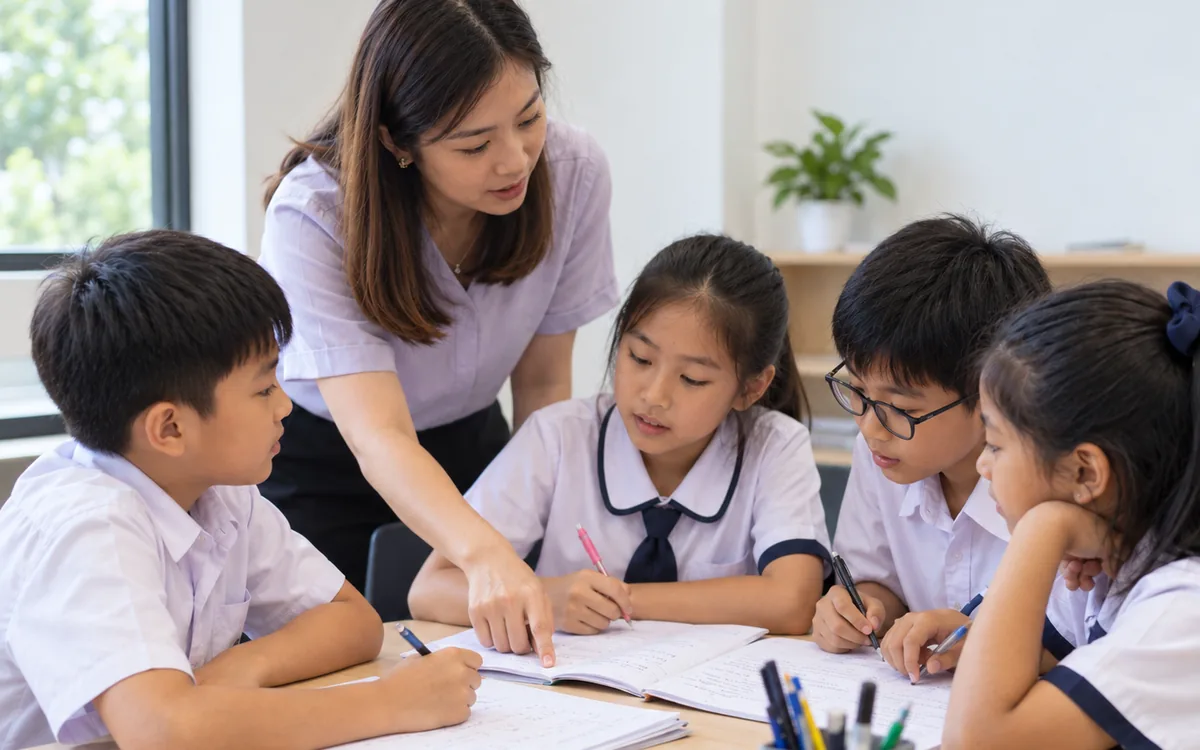
Six is the largest class in which one teacher can still check every child's work in every lesson, give every child a turn to read, explain or answer, and change pace the moment someone is lost. It is also large enough for children to learn from each other's questions and mistakes, which one-to-one tuition cannot give. Above six, attention goes to whoever asks; below three, the room goes quiet.
| Format | Teacher attention per child | Peer learning | Typical cost per lesson | Best for |
|---|---|---|---|---|
| 1-to-1 private tutor | Full, for the whole lesson | None | Highest | A specific gap that needs intensive, short-term repair |
| Small group, max 6 (WhaleYou) | Every child's work checked every lesson | Yes, questions and mistakes are shared | $50 to $60 per lesson | Steady progress through the school year with real attention |
| Group of 8 to 12 | Whoever asks, or whoever is loudest | Yes | Lower | Confident children who mainly need practice material |
| Lecture-style, 15 or more | Minimal; marking often done by assistants | Little | Lowest | Content delivery, not individual correction |
WhaleYou fees are per lesson by level: $50 (P1 to P3), $55 (P4 to P5), $60 (P6). Other formats are typical Singapore ranges, not quotes for any named centre.
If your child is the one who is struggling
Most families come to us because something is not clicking. A class of six is built for exactly that child.
We start by finding the exact problem
Not a label of weak, but the specific topics that are missing, so the teaching lands where it is actually needed.
Being lost gets noticed in the moment
With six children the teacher sees the confused face and slows down for it then and there, not after the next exam reveals it.
Weak is a problem to solve, never a label
Children are often here precisely because they already feel behind. Confidence is part of the job, and a child who feels safe to be wrong learns faster.
Understanding one thing beats copying ten
We would rather your child leave having really understood a concept than having filled a page they cannot explain.
What does a lesson with six students look like?
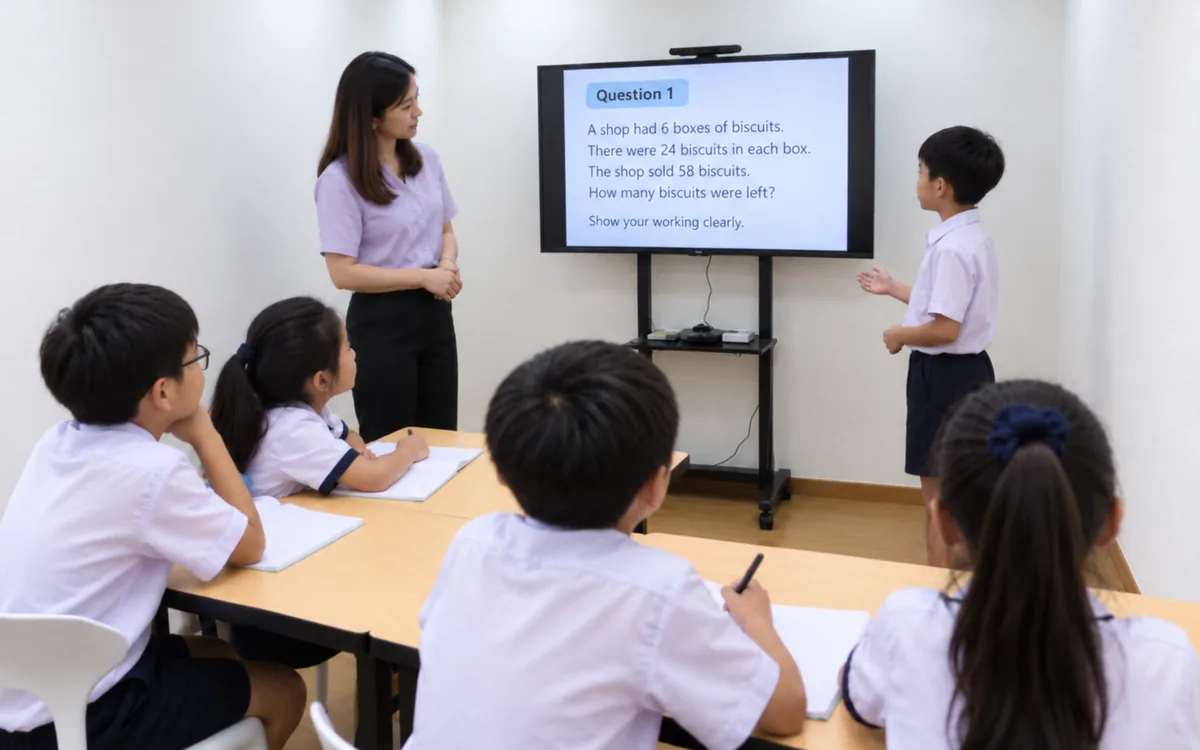
Warm-up and check
The teacher looks at last lesson's practice from every child. Six sets of work take minutes, not the whole lesson.
Teach the topic the school is on
The concept for this week, explained once to the group, then worked through with each child answering in turn.
Practice with the teacher beside you
Children work through questions while the teacher moves between six desks. Stuck children get the teacher, not a worksheet to take home.
Stretch or fix
Children who finish get extension questions. Children who are struggling get the concept again, differently.
Read, explain or answer out loud
Every child speaks every lesson: reading aloud in English and Chinese, explaining working in Maths, answering in full sentences in Science.
One thing for home
Short, specific practice for the week, so parents know what to look for.
How is the cap of six enforced?
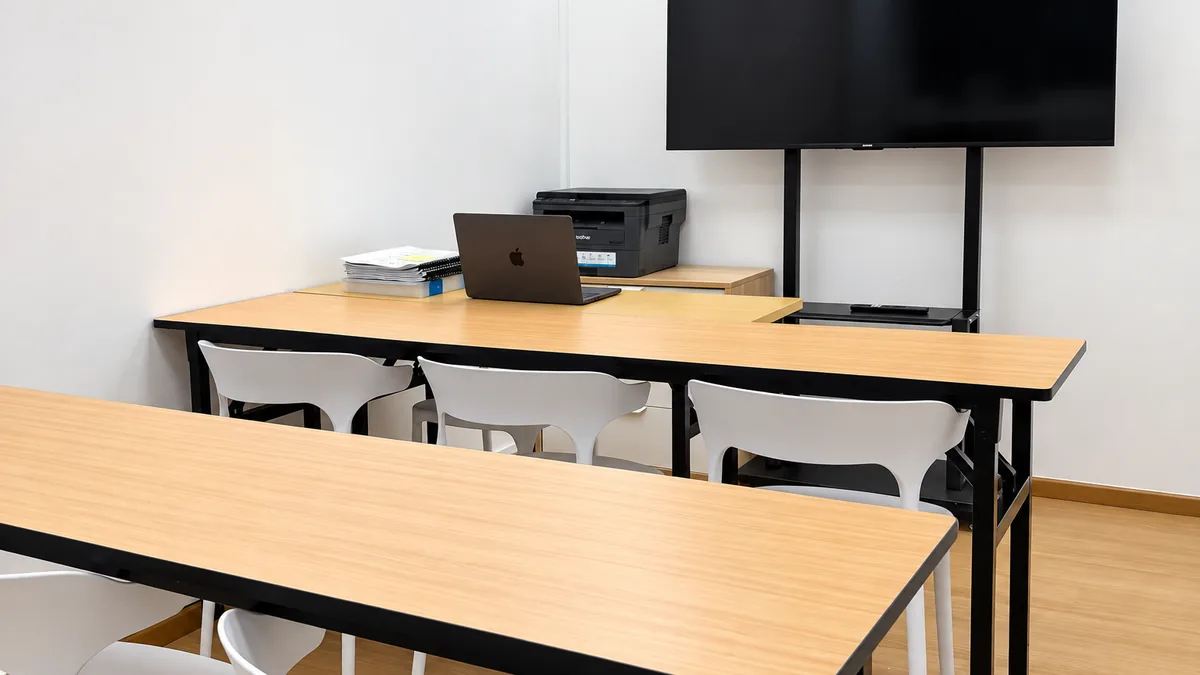
Three ways, all checkable. The cap is written into our enrolment terms. The timetable shows seats left out of six for every class. And our classrooms are set up with six desks, so a seventh child would not have a place to sit. When a class fills, we open a second class or offer the waitlist.
six chairs, never seven
Questions parents ask
How many students are in a WhaleYou class?
Never more than six. Every Primary 1 to 6 class at WhaleYou Learning is capped at 6 students with one teacher, at both Beauty World Centre and Alexandra Central. If a class is full we open a new one or waitlist; we do not add a seventh chair.
Why six students and not fewer or more?
Six is the largest class in which a teacher can still check every child's work, hear every child read or explain, and adjust the pace when someone is lost, while keeping the peer energy that one-to-one tuition loses. Larger classes drift into lectures.
Can siblings at different levels attend at the same time?
Often, yes. Because all four subjects and all six levels run at each centre, we try to place siblings in classes that run at the same time so parents make one trip. Tell us the levels when you book and we will look at the timetable together.
What happens in a lesson?
Each lesson works through the topic the school is on that term, then practice with the teacher checking every child's working, then targeted correction. Students who finish early get extension questions; students who are stuck get the teacher beside them, not a worksheet to take home.
Will I hear how my child is doing?
Yes. Teachers share what they notice about your child during the year, not only at report time. With six students at most, the teacher sees every child's work in every lesson.
How does the $20 trial lesson work?
Your child joins a real class of six or fewer for one full lesson, at either centre. The teacher then shares what they noticed and whether the class is the right fit. There is no obligation to continue, and no sales talk.
See a class of six for yourself
Book a $20 trial lesson at Beauty World or Alexandra Central and watch how much attention your child gets.