
Primary Science tuition at a glance
| Subject | Primary Science |
|---|---|
| Levels | Primary 3 to Primary 6 |
| Class size | Maximum 6 students, one teacher |
| Centres | Beauty World Centre, Bukit Timah and Alexandra Central, Queenstown |
| Syllabus | Current MOE primary Science syllabus, following the school term |
| Fees | $50 per lesson (P1 to P3), $55 (P4 to P5), $60 (P6), see fees |
| Trial lesson | $20, in a real class, no obligation |
| Timetable | Days, times and seats left |
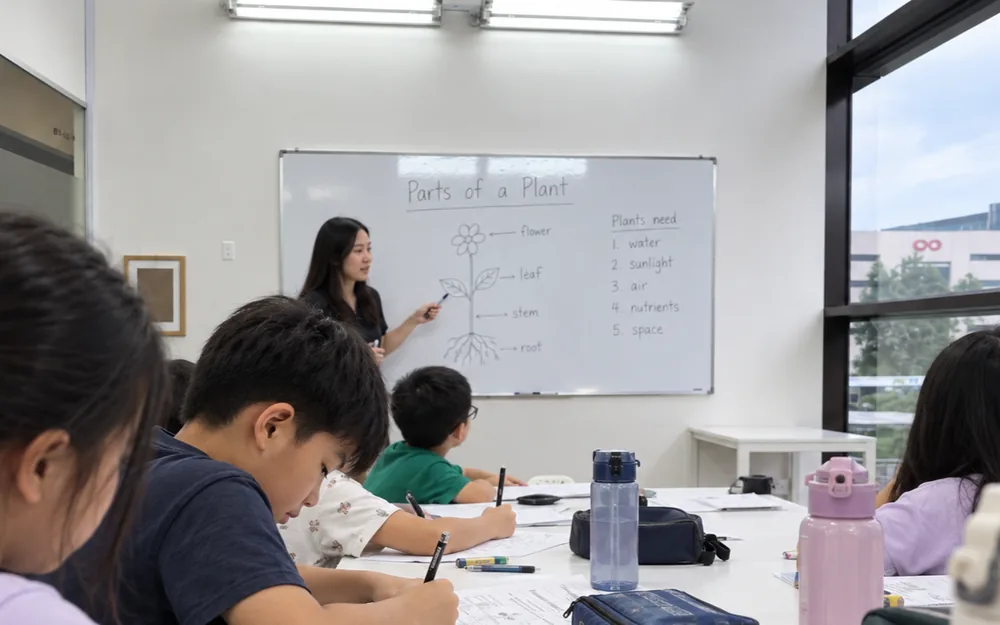
"why does the ice melt faster?"
Science starts in Primary 3, and many children lose marks not on the concepts but on how they write their answers. Our classes teach every theme in the MOE syllabus clearly, then the answering technique that turns understanding into marks on open-ended questions.
What does each level cover in Primary Science?
Classes are grouped by level so the pace matches the school year. The focus areas below follow the current MOE syllabus; the exact topic order follows each school's term.
| Primary 3 and 4 (lower block) | Diversity: living and non-living things, plants, animals, fungi and bacteria, materials. Cycles: life cycles of plants and animals, matter. Systems: plant parts, the digestive system. Interactions: magnets. Energy: light and heat. |
|---|---|
| Primary 5 (upper block begins) | Cycles: the water cycle, reproduction in plants and humans. Systems: cells, the respiratory and circulatory systems, plant transport, electrical systems. PSLE-format practice begins with Booklet B open-ended questions. |
| Primary 6 | Interactions: forces, the environment, food chains and webs, adaptations. Energy: forms and uses of energy, photosynthesis, energy conversion. Full revision of P3 to P6 themes, timed PSLE papers with error review. |
What is the PSLE Science format?
PSLE Science is one paper in two booklets. Booklet A is multiple choice; Booklet B is open-ended questions where students must explain, compare and describe experiments in their own words. Booklet B is where most marks are lost, and it is where our teaching concentrates: the keywords markers look for, cause-and-effect sentences in the right order, and how to read what an experiment is actually testing.
How does a Science lesson with six students run?
The teacher checks last week's practice from every child, teaches the topic the school is on this term, then moves between six desks while the class works. Every child reads, explains or answers out loud every lesson. Children who finish early get extension questions; children who are stuck get the teacher beside them. One specific thing goes home for the week. Read more about why we cap at six.
Where do primary school students lose Science marks?
Answers that are true but do not answer the question
A child writes what they know about plants when the question asks why this plant wilted. We train the routine: what is being tested, what is the evidence in the question, what is the cause and what is the effect.
Missing keywords
Markers look for specific terms. Saying it in everyday words loses the mark even when the idea is right. We build a keyword bank per topic.
Experiment questions
Aim, variables, fair test, what the result shows. These follow patterns that can be learned, and we drill them from Primary 4.
Concepts memorised, not understood
Six students means the teacher can ask each child to explain the concept back, which is the only reliable check that it has been understood.
Where are Primary Science classes held?
At both WhaleYou centres, with the same fees, class size and programme. Pick the one closer to home or school.
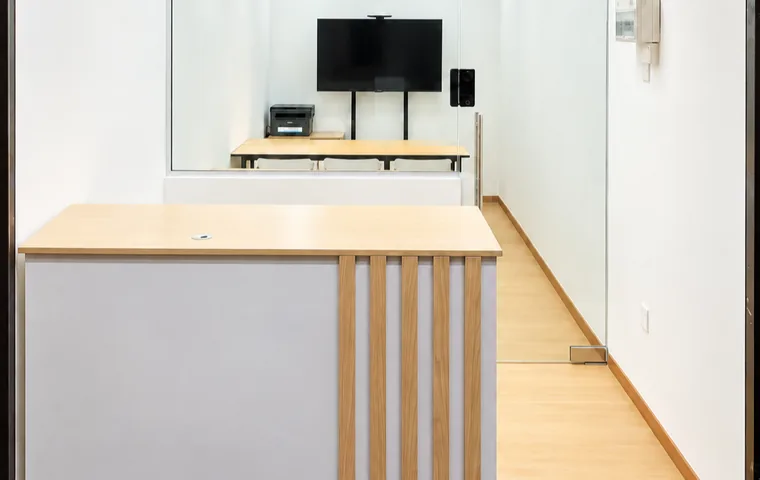
WhaleYou Learning Beauty World, Bukit Timah
Beauty World Centre, 144 Upper Bukit Timah RoadSingapore 588177
Unit number to be confirmed
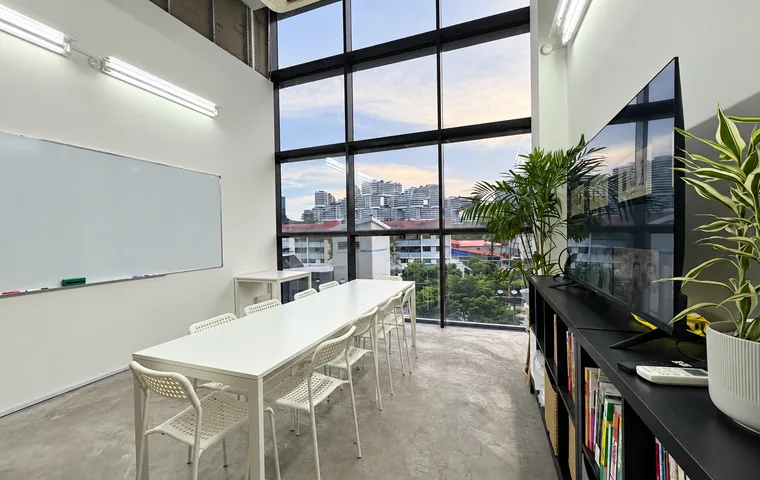
WhaleYou Learning Alexandra Central, Queenstown
Alexandra Central, 321 Alexandra RoadSingapore 159971
Unit number to be confirmed
Primary Science timetable and seats left
Seats are shown out of six, the real cap on every class.
Choose your child's level
Also at WhaleYou: English tuition, Maths tuition, Chinese tuition. Families often book two subjects back to back so one trip covers both.
Questions parents ask about Primary Science tuition
How do you teach open-ended Science questions?
By training the answering technique, not just the content: identify what the question is testing, use the keywords the marker looks for, and write cause and effect in the right order. Most marks lost in primary Science are lost on how answers are written.
Why does Science only start at Primary 3?
Because that is when Science begins as a subject in Singapore primary schools. Our Science classes run from P3 to P6 and follow the MOE syllabus themes for the lower block (P3 and P4) and upper block (P5 and P6).
Do your classes follow the MOE syllabus?
Yes. Each class follows the MOE primary syllabus for its level and the school term, so what your child does at WhaleYou lines up with homework and school exams. In Primary 5 and 6, practice moves to PSLE format.
How many students are in a WhaleYou class?
Never more than six. Every Primary 1 to 6 class at WhaleYou Learning is capped at 6 students with one teacher, at both Beauty World Centre and Alexandra Central. If a class is full we open a new one or waitlist; we do not add a seventh chair.
How much does a lesson cost?
$50 per lesson for Primary 1 to 3, $55 for Primary 4 to 5 and $60 for Primary 6, for every subject and at both centres. A trial lesson is $20. Full details are on the fees page.
How does the $20 trial lesson work?
Your child joins a real class of six or fewer for one full lesson, at either centre. The teacher then shares what they noticed and whether the class is the right fit. There is no obligation to continue, and no sales talk.
Try a Primary Science lesson for $20
Your child joins a real class of six or fewer at Beauty World or Alexandra Central. The teacher tells you honestly whether it fits.